

New 10 AI Art Prompts for Sci-Fi, Fantasy, and Surreal Digital Illustrations of Cybernetic Animals
This collection brings together ten wildly imaginative AI art prompts that blend sci-fi, fantasy, and surrealism with the theme of cybernetic animals and beyond. Each prompt invites you to craft a distinct visual story, whether you're transforming a pet into a paper-cut illustration or placing a miniature explorer in a giant sushi landscape. The shared thread is a sense of wonder, precision, and playful experimentation with identity and environment.
From glowing holograms to frost-etched portraits, these prompts push the boundaries of what AI image generators can do. They demand careful attention to detail, reference photos, and stylistic choices. In this article, we'll unpack the core ideas, offer practical guidance, and help you avoid common pitfalls when bringing these scenes to life.
What this cybernetic-animal prompt collection is asking for
This set of ten prompts explores the fusion of organic life with futuristic, fantastical, or surreal elements, often using an uploaded reference photo to anchor the subject's identity. The collection ranges from soft, handcrafted aesthetics to hyper-realistic cinematic scenes, all centered on transformation—of materials, scale, or reality itself. Each prompt specifies a unique visual twist, such as a face formed from autumn leaves or a playful underwater selfie with a shark.
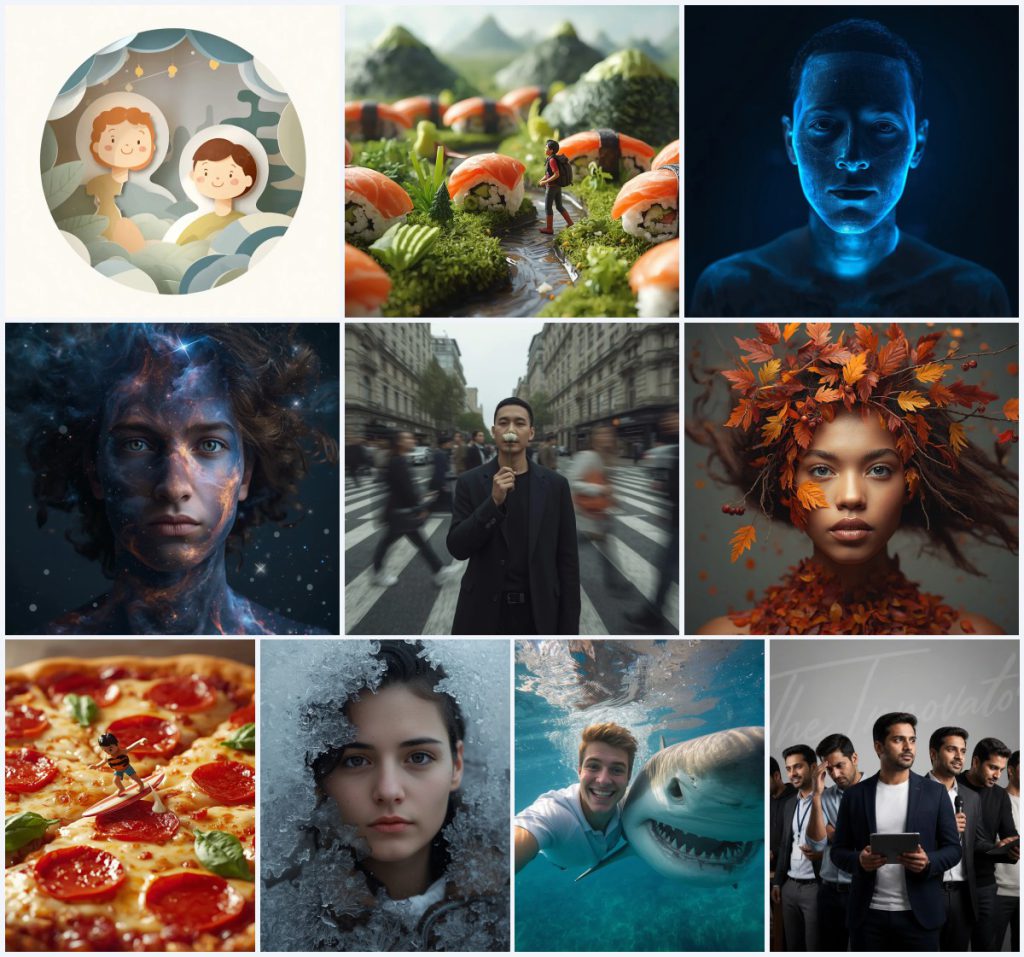
- A soft paper-cut illustration with layered depth, dot eyes, and a thick white outline resembling a sticker border.
- A miniature person exploring a giant sushi roll landscape with soy sauce rivers and wasabi mountains.
- A glowing hologram portrait in a dark futuristic room with shimmering particles and cyan light.
- A face crafted from swirling nebulae, galaxies, and stars with cosmic dust defining features.
- A calm figure smelling a flower amid motion-blurred city chaos on an overcast day.
- A portrait composed of autumn leaves, twigs, and dried berries with soft sunlight.
The visual world these prompts build
Each prompt constructs a self-contained universe where the ordinary collides with the extraordinary. In the paper-cut scene, "layered paper elements with clear depth" and "crisp edges that resemble precisely cut cardstock" create a tactile, childlike charm. The sushi landscape amplifies scale with "a river of soy sauce flows nearby, and towering wasabi mountains loom in the distance," turning food into an epic terrain.
Other scenes lean into atmospheric tension. The hologram portrait uses "deep blue and cyan light, dramatic shadows" to evoke mystery, while the autumn-leaf face relies on "soft, diffused autumn sunlight" and "warm and earthy color palette" for a whimsical feel. The underwater selfie balances danger and playfulness with "a large, lifelike great white shark, whose mouth is slightly open, revealing sharp teeth, yet appearing calm."
Why these prompts spark creative breakthroughs
These prompts excel because they merge technical precision with emotional storytelling, pushing AI tools to render complex textures, lighting, and identity preservation. They encourage artists to explore scale, materiality, and mood in ways that feel both personal and universal. The collection also demonstrates how reference photos can anchor surreal concepts in recognizable humanity.
- They challenge AI to blend disparate elements—like frost crystals and facial features—into cohesive, photorealistic images.
- The variety of styles, from papercraft to cosmic art, helps users test the versatility of different AI platforms.
- Each prompt includes specific details like "shallow depth of field" or "8K resolution" that guide the generator toward professional-grade output.
Three artistic styles embedded in these prompts
The collection spans three distinct artistic approaches that shape the final image. Each style is woven directly into the prompt's language, ensuring the AI adheres to a specific visual language without straying into unrelated territory.
- Papercraft Diorama: This style uses layered cardstock-like elements with soft shadows and rounded shapes, as seen in the paper-cut illustration prompt.
- Hyper-Realistic Conceptual: Prompts like the hologram or nebula portrait demand photorealistic textures and dramatic lighting to sell the surreal concept.
- Cinematic Food Fantasy: The sushi and pizza scenes rely on rich colors, sharp focus, and lifelike food details to create immersive, playful worlds.
How to generate these cybernetic-animal images step by step
Start by selecting a prompt from the collection that matches your creative goal, then prepare your reference photo if the prompt requires identity preservation. Each step below helps you navigate the generation process while avoiding common technical glitches.
- Copy the prompt text exactly. Paste the full prompt into your chosen AI image generator's text field, preserving all formatting and keywords like "8K resolution" or "aspect ratio."
- Upload a clear reference photo. For prompts labeled "Uploaded Exact Face," use a well-lit, front-facing portrait with minimal shadows to ensure accurate identity matching.
- Set the aspect ratio and style parameters. Adjust the generator's settings to match the prompt's specified ratio, such as 3:4 or 9:16, and select a realism-focused model if available.
- Generate and review initial results. Run the prompt and examine the output for adherence to the scene, checking that key elements like the sushi landscape or hologram effect are present.
- Check hands, face, and main object. Zoom in on hands for correct finger count, verify facial features match the reference, and ensure the main object—like the pizza slice—has realistic textures.
- Refine with negative prompts or inpainting. If the AI adds unwanted elements, use negative prompts to exclude them, or apply inpainting to fix distortions in the face or background.
Choosing the right reference photo for these prompts
A high-quality reference photo is critical for prompts that preserve identity, as it directly influences how the AI reconstructs facial features in surreal contexts. The photo should be sharp, well-lit, and free of obstructions to give the generator clear data to work with.
- Use a front-facing portrait with even, natural lighting to avoid harsh shadows that distort the face in outputs like the frost-etched window prompt.
- Ensure the photo captures your full facial features, hairstyle, and skin tone, as the nebula and leaf prompts blend these with cosmic or organic textures.
- Avoid photos with heavy filters or accessories, since the AI may misinterpret them when creating the hologram or autumn-leaf effects.
Best AI tools for these sci-fi and fantasy prompts
Different AI platforms handle these prompts with varying levels of realism and identity preservation. The table below compares four popular tools based on their accessibility and suitability for details like the paper-cut outline or the shark's teeth.
| Tool | Access | Typical realism | Useful here for |
|---|---|---|---|
| ChatGPT | Web and mobile | Moderate to high | Rendering the soft paper-cut illustration with layered depth and sticker-like outlines |
| Google Gemini | Web and app | High | Preserving exact facial identity in the hologram portrait with shimmering particles |
| Leonardo AI | Web platform | Very high | Creating the ultra-realistic food textures in the giant sushi roll landscape |
| Midjourney | Discord-based | Exceptional | Capturing the dramatic lighting and sharp teeth of the great white shark underwater selfie |
Three tips for nailing the details in these prompts
Small adjustments can make a big difference when generating these complex scenes. Focus on the tangible materials and objects mentioned in the prompts to guide the AI toward more accurate results.
- For the paper-cut prompt, emphasize "cardstock" and "gentle shadows" in your generation settings to avoid flat, digital-looking edges.
- In the sushi landscape, prompt for "glistening oil" and "crispy crust" separately if the initial output lacks food texture realism.
- When working with the frost-covered window prompt, use keywords like "ice crystals" and "breath fogging" to enhance the wintry, melancholic mood.
Common issues when generating these prompts
Even with detailed prompts, AI generators can stumble on complex elements like identity preservation or material textures. The table below outlines frequent failures and practical fixes.
| Issue | What to change |
|---|---|
| Facial features don't match the reference in the nebula portrait | Increase the weight of the identity reference phrase, or use a tool with stronger face-lock features like Leonardo AI |
| The paper-cut outline looks like a digital glow instead of a sticker border | Add terms like "matte cardstock" and "no glow effect" to the prompt, and reduce the AI's default stylization |
| The shark in the underwater selfie appears aggressive or distorted | Reinforce "calm and non-threatening" in the prompt, and use negative prompts to exclude bared teeth or attack postures |
| Motion blur in the city scene affects the main subject instead of the crowd | Clarify "I remain perfectly sharp and in focus" with higher contrast settings, and mask the subject during inpainting if needed |
Frequently Asked Questions
Can I use these prompts without uploading a reference photo?
For prompts labeled "Uploaded Exact Face," the AI relies on a reference to preserve identity, so skipping it will produce a generic face. For others like the paper-cut illustration, you can generate without a photo, but the result may lack personalization.
Why does the sushi landscape sometimes look like a cartoon instead of realistic?
This happens when the AI defaults to a stylized interpretation. To fix it, add terms like "ultra-realistic" and "premium culinary photography" to your prompt, and choose a realism-focused model in your generator.
How do I prevent the hologram portrait from looking like a simple blue filter?
Emphasize "intricate lines, shimmering particles, and translucent three-dimensional effect" in the prompt. You can also use a reference image of actual holographic art to guide the AI's texture generation.
Conclusion
This collection of sci-fi, fantasy, and surreal prompts offers a playground for AI artists to explore identity, scale, and material transformation. By following the practical steps and tips outlined here, you can consistently produce stunning images that balance technical accuracy with creative flair. Experiment with the tools and styles suggested, and don't be afraid to iterate—each generation brings you closer to the perfect cybernetic-animal vision.
Always ensure you have the right to edit any reference photo you upload, and respect the original creator's permissions when sharing your AI-generated art.